

Our Project
Discover how Altitudine Carpatica works to protect Romania’s birds of prey through conservation, rehabilitation, research, education, and community partnership.
01
Wildlife Conservation & Species Restoration
We work to protect native birds of prey and rebuild their populations in the Carpathians. Our efforts focus on restoring ecological balance, safeguarding threatened species, and strengthening the natural identity of the region by reconnecting habitats and biodiversity corridors.
Breeding Endangered Species
Altitudine Carpatica may, where appropriate and in coordination with relevant conservation partners, support targeted breeding initiatives for threatened raptor species. Such actions would be considered as a future, complementary measure—designed to assist the recovery of species that have significantly declined or disappeared from parts of the Carpathians, and only where they align with broader conservation strategies and ecological needs.
Rewilding & Release Efforts
The primary focus of Altitudine Carpatica’s rewilding work is the return of injured, treated, and fully recovered birds of prey to the wild. Following veterinary care, flight conditioning, soft-release protocols, and behavioral assessment, suitable individuals are released into appropriate natural habitats. Where relevant, additional conservation measures may support long-term population recovery within the region.
Rehabilitation of Injured Birds of Prey
Injured or abandoned raptors will receive veterinary treatment, species-specific care, and conditioning, with the goal of returning recovered individuals to the wild whenever possible.
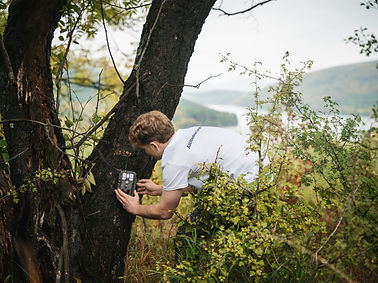
GPS Tracking & Wildlife Camera Monitoring
The project plans to use GPS telemetry and wildlife cameras to track released birds, study behavior, identify key habitats, and guide long-term conservation decisions.
Habitat Improvement & Landscape Restoration
Healthy habitats are essential for successful conservation. Altitudine Carpatica plans to restore deforested plots and transform them into functional raptor habitats, build and install nest boxes, and explore the insulation of high-risk power lines to reduce electrocution. The project also aims to collaborate with local forestry departments on sustainable management practices and to organize clean-up events that help maintain the ecological quality of the region.
02
Rescue, Rehabilitation & Scientific Research
At the core of Altitudine Carpatica is the mission to rescue and rehabilitate injured, abandoned, or human-imprinted birds of prey. Raptors are often harmed by collisions, electrocution, poisoning, and habitat loss, and the project provides a safe, professional setting where they can receive medical care, recover strength, and—whenever possible—return to the wild.
With veterinary expertise and species-specific handling, each bird receives individualized treatment, from emergency stabilization and anesthesia to wound care and flight conditioning. Every step is designed to prepare the raptor for a successful rewilding.

A Rehabilitation System Tailored to Raptors
Medical treatment for injuries, infections, and trauma
Specialized handling and husbandry tailored to each species
Flight conditioning in aviaries to rebuild strength and agility
Behavioral evaluation to assess readiness for release
Soft-release methods in suitable habitats to maximize survival
Integrating Veterinary Expertise & University Research
Rehabilitation is not only about saving individuals—it is a gateway to scientific progress.
Our collaboration with the University of Life Sciences “Ion Ionescu de la Brad” Iași connects rescue work with academic research in:
Wildlife medicine & surgery
Avian pathology and parasitology
Disease surveillance in wild populations
Raptor behavior and stress physiology
Ecology and population health

Altitudine Carpatica plans to offer internships and practical training for veterinary and biology students, as well as young wildlife researchers. Through hands-on experience with injured raptors, participants will learn key skills in avian medicine, rehabilitation, field monitoring, and conservation research—helping train the next generation of specialists in wildlife health and raptor conservation.

03
Education, Community Engagement & Cultural Heritage
We inspire people to connect with nature through education programs, guided activities, and community involvement. By promoting falconry as UNESCO cultural heritage and linking tradition with conservation, we help build a culture of respect and responsibility toward wildlife.
School & Youth Education
Altitudine Carpatica aims to engage young people through school visits, nature walks, and outdoor education sessions, helping students understand raptor biology, ecosystems, and local conservation challenges in an accessible way.
University Collaboration
In partnership with the University of Life Sciences “Ion Ionescu de la Brad” Iași, the project plans to offer practical training for veterinary and biology students through workshops, field exercises, and exposure to wildlife medicine and rehabilitation.
School & Youth Education
The project also plans to involve local communities through hands-on activities such as building nest boxes, painting falconry hoods, and participating in small habitat-improvement projects. These events help families and children connect personally with conservation.
Cultural Heritage & On-Site Learning
Falconry—recognized by UNESCO as intangible cultural heritage—will be shared through demonstrations and storytelling to connect visitors with traditional knowledge. A future on-site educational museum will showcase raptor ecology, biodiversity, and falconry heritage in an immersive way.
04
Sustainable Development & Ecotourism
We support rural communities by creating nature-based opportunities that benefit both people and wildlife. Through ecotourism and sustainable development initiatives, we show that protecting the environment can strengthen local economies and preserve cultural and natural heritage.

The Region – A Biodiversity Hotspot in the Eastern Carpathians
The project is located in the biologically rich transition zone between the high Carpathian Mountains (Nemira range) and the lower foothills surrounding Valea Uzului and Dărmănești. This landscape forms a mosaic of forests, meadows, rivers, wetlands, and agricultural edges that support a wide range of raptor species and their prey. Its diversity makes it one of the most suitable areas in Romania for raptor restoration, soft-release programs, ecological monitoring, and long-term conservation work.

Forests
Large, interconnected woodland systems ideal for forest-dependent raptors such as the imperial eagle, black kite, and Eurasian eagle-owl
Agricultural Margins
Low-intensity farmland that can function as eco-agriculture buffer zones benefiting both prey and predators
Rivers & Lakes
Freshwater ecosystems that sustain amphibians, fish, and scavenger species
Remote Mountain Zones
Quiet, sparsely populated areas suitable for future rewilding of wide-ranging species such as the cinereous vulture or steppe eagle
Mountain Meadows
Open hunting grounds for large raptors and steppe-associated species
Cliffs & Rocky Slopes
Steep rock faces, gorges, and exposed slopes providing nesting sites for cliff-dependent raptors like the peregrine falcon, and eagle-owl
A Strategic Conservation Location
Being positioned near such an extensive protected-area network allows the project to serve as:
Breeding and soft-release center for multiple raptor species
Monitoring hub for ecological corridors between Natura 2000 zones
Buffer zone supporting species that move between protected habitats
Future rewilding base for species requiring remote, high-quality territories
Nearby Natura 2000 sites include
Natura 2000 is a European network of protected natural areas created to safeguard the continent’s most valuable habitats and species. Unlike traditional nature reserves, these sites support both conservation and sustainable human activities. Through this network, the EU works to protect biodiversity, maintain healthy ecosystems, and ensure that rare or threatened wildlife can thrive for generations to come.
~3.5 KM
Creasta Nemirei
~9.6 KM
Nemira-Lapoș
~12 KM
Tinovul Apa Lină–Honcsok
~13 KM
Slănic
~18 km
Măgura Târgu Ocna
~37 km
Munții Ciucului
~37 km
Piatra Șoimului–Scorțeni–
Gârleni
(ROSCI0047) – 3,591 ha
High-altitude ridgeline with rocky outcrops, subalpine grasslands and protected alpine flora.
(ROSCI0327) – 9,980 ha
Mountain habitats with spruce forests, rocky ridges and valuable large carnivore populations.
(ROSPA0169) - 7830 ha
Important bird area with wetlands, wet meadows and mosaics of pasture supporting breeding and migratory species
(ROSCI0230) - 1,393 ha
Salt-rich habitats and gorges, hosting unique halophilous vegetation and rare invertebrates
(ROSCI0318) - 848 ha
Forested hill area with karst features, bats, and mixed broadleaf habitats.
(ROSCI0323) - 60,045 ha
Extensive mountain landscape with forests, meadows, bears, wolves and diverse plant communities
(ROSPA0138) - 37,383 ha
Hilly and river valley landscapes important for raptors, forest birds and steppe-like grasslands.
EU Policy and Strategy Alignment
The Raptor Rewilding Project in the Carpathian Mountains is designed to contribute directly to
multiple EU environmental directives, biodiversity goals, and strategic frameworks. Each alignment
reinforces the project’s added value at both national and European levels.
.png)
Habitats Directive (92/43/EEC)
By restoring forests, grasslands, and mountain habitats used by raptors and their prey, the project
contributes to the Natura 2000 network and the achievement of Favourable Conservation Status
for protected habitats and species. Activities will align with existing Natura 2000 site management
plans to ensure coherence and avoid duplication.
Birds Directive (2009/147/EC)
The project will restore and maintain viable populations of threatened raptor species, includingthose listed in Annex I of the Birds Directive, such as the Eastern Imperial Eagle (Aquila heliaca),Griffon Vulture (Gyps fulvus), and Saker Falcon (Falco cherrug). Actions will focus on breeding,soft release (hacking), and habitat improvement within Special Protection Areas (SPAs), ensuringmeasurable gains in conservation status.
EU Biodiversity Strategy for 2030
The project supports the EU goal of halting species decline by 2030 by reintroducing apex
predators, restoring degraded ecosystems, and improving biodiversity resilience. These actions are
part of the EU Nature Restoration Plan, contributing to the overarching objective of reversing
biodiversity loss.
European Green Deal
The project complements the Green Deal’s vision for a sustainable and climate-resilient Europe by:

Restoring natural capital through species reintroduction.
Creating local green economy opportunities via eco-tourism and environmental education.
Supporting Sustainable Land Managment
Zero Pollution Action Plan
The project will reduce environmental risks to biodiversity by:
.png)
Raising awareness about pesticide impacts on raptors.
Preventing habitat contamination through good waste and water management practices.